10 Benefits of Hydrotherapy Rehabilitation: Why Patients Choose Water-Based Recovery
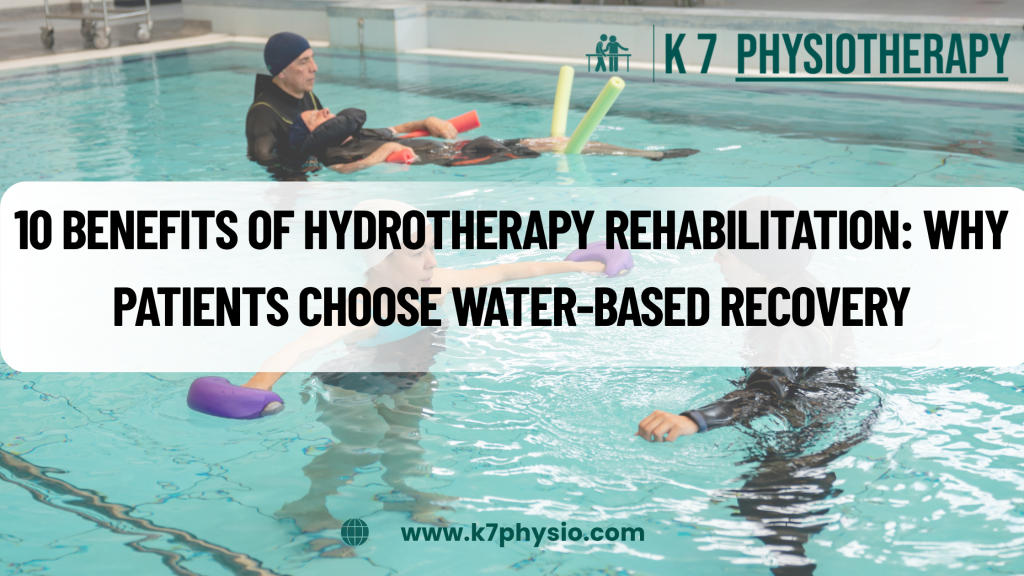
There’s a reason why many patients refer to hydrotherapy as the time when their recovery finally began to feel more attainable.
For some, it’s their first time they’ve ever walked with no anxiety about pain. For others, it’s a feeling of confidence, swimming in the waters after months of being unsure.
Many people are recovering from surgeries, neurological issues or arthritis issues. Hydrotherapy is more than a form of exercise. It becomes an important turning point.
At K 7 Physiotherapy Clinic, K 7 Physiotherapy Rugby, we recognise that rehabilitation isn’t only about exercise. It’s about helping patients feel secure, supported and confident enough to be able to move and move.
This is precisely that’s why the hydrotherapy rehab continues to be among the most frequently requested physiotherapy treatments from patients who want a more gentle and comfortable way to recover.
1. “I Can Finally Move Without Fear”
The first thing that patients often mention in hydrotherapy is “Movement is easier when in the water.”
Warm water is a great support for the body and eases stress on joints. This makes exercises less daunting than land-based rehabilitation.
For patients struggling with:
- Arthritis
- Persistent joint pain
- Mobility issues
- Post-surgery stiffness
The supportive environment can be a major boost both physically and emotionally.
We at K 7 Physiotherapy often see patients gain confidence because they understand that it is not necessary to be uncomfortable.
2. Hydrotherapy Feels Less Overwhelming Than Traditional Exercise
The thought of going to the gym after the operation or illness can be overwhelming.
Hydrotherapy provides a more tranquil and more comfortable environment in which rehabilitation is a gradual process, well-controlled and manageable.
Many patients opt for hydrotherapy rehabilitation due to:
- It feels gentler on the body
- Exercises can be adapted individually
- Water creates natural support
- Sessions feel more relaxed and manageable
This is especially beneficial for those who are older and returning to active after prolonged periods of diminished mobility.
3. Patients With Arthritis Often Feel More Comfortable in Water
Being a victim of painful or stiff joints can hinder daily activities such as walking, climbing stairs or sitting down at a good pace.
Arthritis sufferers often seek rehabilitation with hydrotherapy due to the fact that warm water can ease stiffness and promote easier motion.
At K 7 Physiotherapy, our aim is always to aid patients in learning to be able to move freely as well as promote the confidence and independence they require to live their lives fully.
4. It Helps Build Confidence After Surgery
Recovery after surgery can sometimes feel frustratingly slow.
Many patients worry about:
- Moving too much
- Causing discomfort
- Losing strength
- Returning to normal activities
Hydrotherapy creates a lower-impact rehabilitation environment where movement can begin more gradually.
Patients recovering from:
- Knee replacement surgery
- Hip replacement surgery
- Orthopaedic procedures
- Sports injuries
often appreciate the feeling of support water provides during recovery.
5. Balance Rehabilitation Feels Safer in Water
Fear of falling can stop people from staying active.
This is especially common among:
- Older adults
- Stroke rehabilitation patients
- People with neurological conditions
- Individuals recovering after illness or hospital stays
Hydrotherapy allows patients to practice movements and balance exercises in an environment that is more supportive.
At K 7 Physiotherapy, our team is aware of the importance of confidence in the field of rehabilitation. If our clients feel safe and secure, they’re more than willing to face new problems.
6. Neurological Rehabilitation Can Feel More Achievable
Hydrotherapy rehabilitation is frequently used alongside neurological physiotherapy for conditions such as:
- Parkinson’s disease
- Multiple sclerosis
- Stroke rehabilitation
- Spinal cord injuries
The buoyancy of water may help patients practise movement patterns more comfortably while reducing the fear associated with balance difficulties.
Many people tell us they feel freer in water than they do on land — and emotionally, that feeling matters.
7. Hydrotherapy Supports Both Physical and Mental Wellbeing
Rehabilitation does not just mean physical.
Chronic pain, decreased mobility or recovery following illnesses can impact your motivation and confidence as well as your mental wellbeing.
Patients frequently describe hydrotherapy sessions as:
- Relaxing
- Encouraging
- Motivating
- Less stressful than traditional exercise
At K 7 Physiotherapy, we believe rehabilitation should feel supportive — not intimidating.
8. It Encourages Gentle Movement Without High Impact
Many people are unable to exercise because it is painful to move.
Hydrotherapy provides a less-impact alternative that encourages exercise and rehabilitation.
This is especially helpful for patients who
- It is difficult to do weight-bearing exercises
- Have chronic pain conditions
- Need gradual rehabilitation support
- Feel nervous about exercising again
Sometimes the biggest step in recovery is simply rebuilding trust in movement.
9. Every Hydrotherapy Journey Is Different
Every rehabilitation process is unique. No two are ever identical.
Here at K 7 Physiotherapy, we recognise that every patient has different goals, challenges and levels of confidence.
Some patients want to:
- Improve walking ability
- Increase balance confidence
- Recover after surgery
- Stay active with arthritis
- Build strength gradually
Hydrotherapy rehabilitation is able to be tailored to meet the individual needs of patients to progress at a rate that is realistic and encouraging.
10. Patients Want Rehabilitation That Feels Supportive — Not Rushed
One of the biggest reasons patients choose K 7 Physiotherapy is that they want rehabilitation that feels personal.
People do not want to feel like:
- Just another appointment
- Rushed through exercises
- Unsupported during recovery
They need guidance, reassurance and physiotherapy that can understand the emotional aspect of healing as equally as its physical aspect.
The human approach is what hydrotherapy rehab continues to aid thousands of people in gaining confidence in their movement.
Why Patients Choose K 7 Physiotherapy for Hydrotherapy Rehabilitation
We are K 7 Physiotherapy our goal is to provide the highest quality of physiotherapy with a patient-centred approach and a focus on the safety of movement, rehabilitation, and long-term health.
We support patients across:
- Rugby
- Coventry
- Warwickshire
- Royal Leamington Spa
- Nuneaton
- Daventry
- Surrounding areas
If you’re recovering from surgery, or battling a brain-related illness and require you to improve your balance or an approach to rehabilitation that is gentler, hydrotherapy could help in your recovery.
Is Hydrotherapy Rehabilitation Right for You?
Every person’s recovery process is unique to every individual. Hydrotherapy is an excellent alternative for people recovering from surgery or injuries, neurological problems or mobility issues, as well as chronic joint discomfort.
At Physiotherapy K 7, we focus on providing supportive rehabilitation that is centred around the patient’s individual goals and levels of comfort.
You may be seeking to increase stability, balance, mobility, or improve overall fitness. Rehabilitation through hydrotherapy can be a relaxing and effective way to recover.
FAQs
1. Is hydrotherapy appropriate for older people?
Hydrotherapy is widely utilised to aid mobility, balance, and confidence in older adults by providing moderately controlled movement.
2. Can hydrotherapy help after surgery?
Hydrotherapy is often used as part of rehabilitation after orthopaedic surgery, including knee or hip replacement.
3. Is hydrotherapy only for injuries?
No. Hydrotherapy can also aid in rehabilitation for arthritis, neurological conditions, mobility issues, and balance issues.
4. Does hydrotherapy replace physiotherapy?
Hydrotherapy is usually used as part of a wider physiotherapy rehabilitation programme tailored to individual needs.